
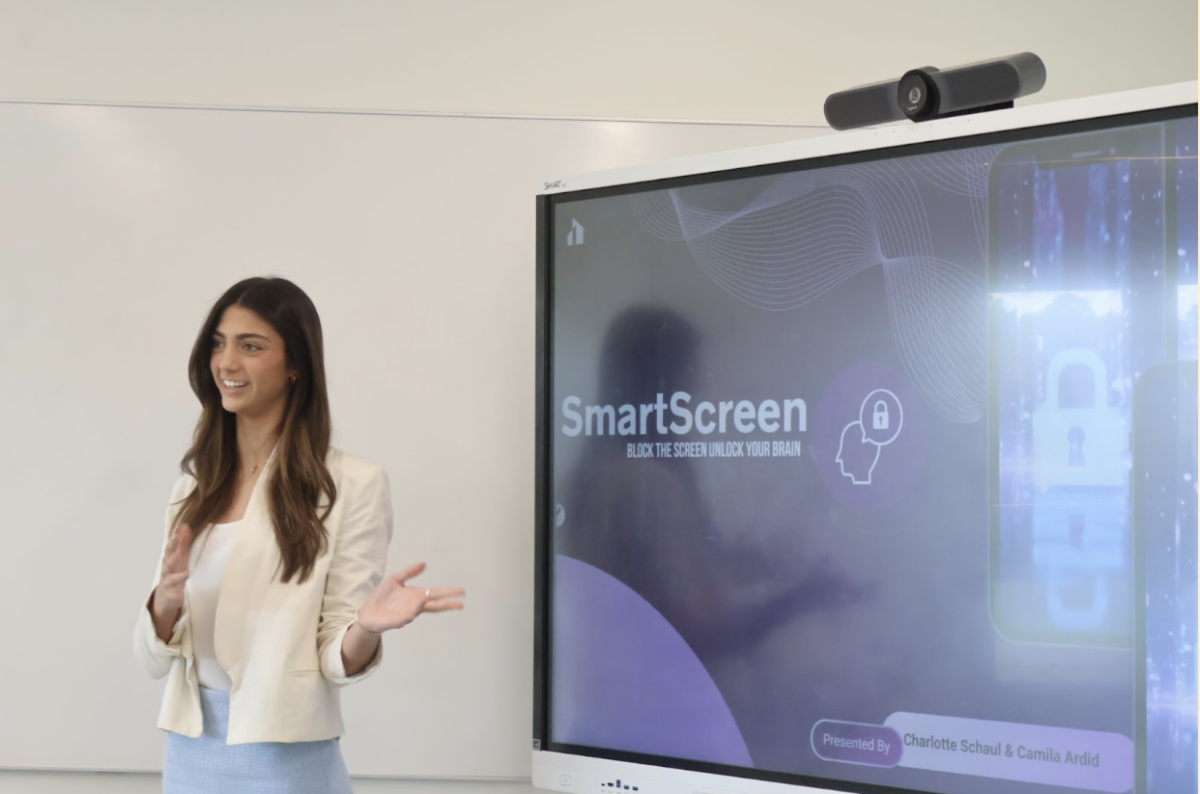
On Wednesday, Mar. 4, Entrepreneurship classes participated in the annual Entrepreneurship Day. Since September, students have worked nonstop on bringing their ideas to life in an 8-minute pitch. These pitches identify a problem, explain how their idea aims to solve it, and include Market Research, Competitive Analysis, Marketing, and Financials. There were six classes, each with 6-7 judges, who announced six winning teams (one per class) to advance to the final Business Showcase held at the MCK Campus on Mar. 24.
Ideas ranged from the food industry to healthcare, with many teams competing against major companies in their markets. One of the biggest challenges was finding a clear edge over competitors. Without a strong differentiator, some teams would focus on making pretty financials, aggressive income statements, and unrealistic net profits, while others would struggle to show enough profit after paying various costs. In the end, judges would notice these weaknesses, which could make or break a team’s chance of advancing.
“I think it was a really scary experience because I’ve never presented in front of judges before, but I feel like our work finally paid off, and I’m really happy that we got through the next round. It’s going to be really nerve-wracking to compete against the other groups, but I think we have a good enough idea, and we’ve been working on it for so long and doing a lot of research that I think we’ll be successful. We have all known each other for a really long time; there’s definitely been setbacks, but overall it’s been a fairly positive experience,” sophomore finalist Maya Welle said.
Overall, students experienced firsthand what goes into launching a business and received valuable feedback from accomplished judges in a safe learning environment. Additionally, each winning team can reach out to their judges for mentorship, who will help them prepare for the final showcase.
“I have been in banking for 35 years and hear business presentations for a living. Some of the Gulliver presentations were better than most I have seen throughout my career. It was a lot of fun for me; the preparation and enthusiasm of the teams had me thinking they should be on Shark Tank right now,” judge Chris Damien said.
However, the teams that advanced found ways to stand out: whether through a functional prototype, physical props during pitches, or reaching out to industry experts. The teacher also played a big role in a team’s success, critiquing all five of each team’s deliverables leading up to Entrepreneurship Day. They also see how students grow as both presenters and entrepreneurs.
“Teams are best prepared by creating an environment where taking a calculated risk is rewarded more than playing it safe. We prepare by simulating the ‘heat’ of the real world through repeated ‘pitch-and-pivot’ sessions and structured mentorship. Students don’t just practice a speech; they defend their logic against feedback and learn to respond to tough questions just like real entrepreneurs. By creating an environment of constant iteration and research, we ensure that when they finally step on stage, they aren’t just prepared—they’re prepared for anything,” Entrepreneurship teacher Kyle Byrnes said.