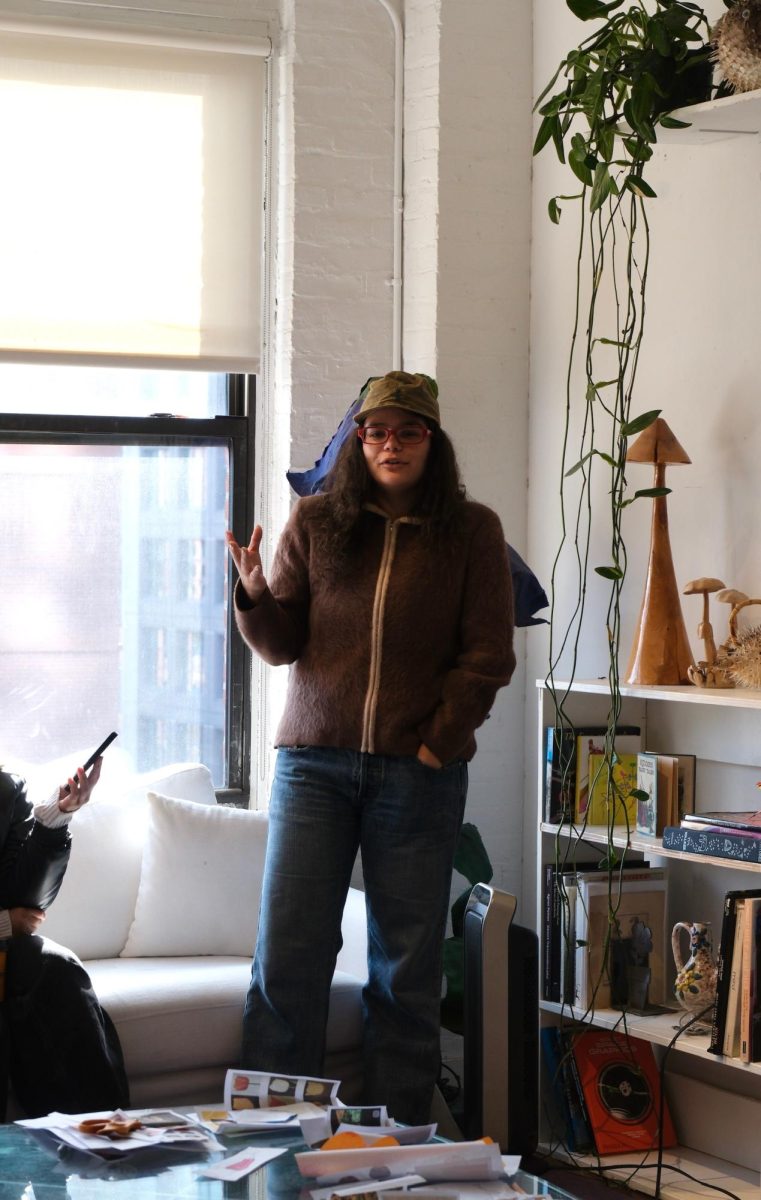
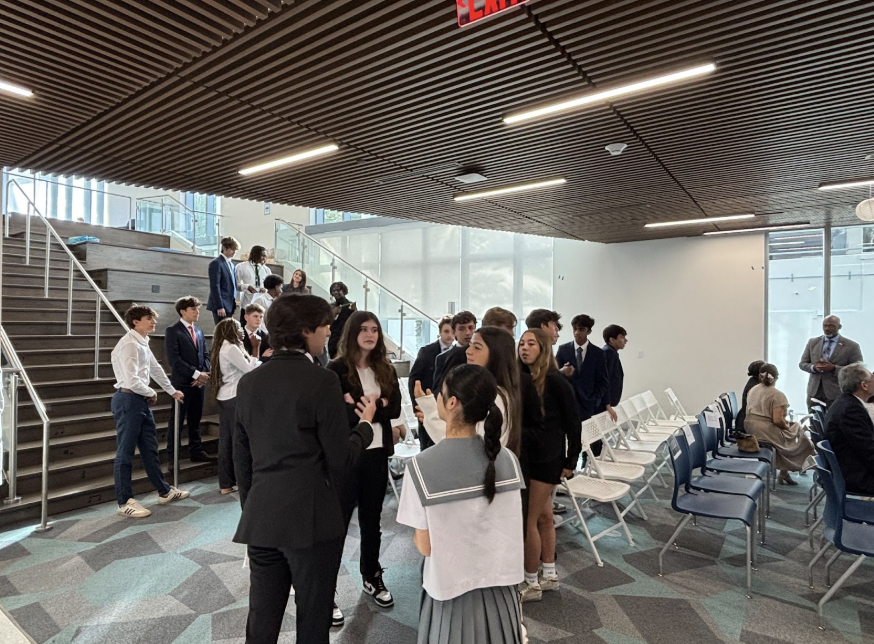
On Oct. 28, the International Diplomacy and Legal Studies Department hosted a Japan–U.S. military treaty simulation in the Stavrinides Family Collaboration Hub, involving students in the Advanced Politics and Government classes as well as Japanese foreign exchange students serving as diplomats.
According to International Diplomacy and Legal Studies Department Head Gabriel Medina, students portraying American ambassadors negotiated with the Japanese exchange students over the establishment of Japanese military bases in the United States. The simulation was loosely modeled on earlier treaties that permitted U.S. bases in Japan, though it did not directly reflect current geopolitical affairs.
“The best part of this year’s Japan–U.S. treaty, compared to last year, is that it looked as though everyone was engaged,” Medina said. “Last year there were a lot of students just sitting there, and I think that Dr. Burnett, Ms. Cotton and I did a good job of changing the assignment so that everyone had a big stake in the outcome. There was a lot more engagement, which, as a teacher, is what you always want.”
Students acted as senators representing individual states, each with the same objective: prevent a base from being built in their own state while gaining points for bases built in neighboring states. The overarching goal was for students to assemble a coalition of five states totaling roughly 180 electoral votes.
“In the Japan–U.S. Treaty simulation, I was representing Nevada and I was also the head delegate for my class,” sophomore Sebastian Taylor said. “It was a nice experience because we had the opportunity to talk to people from totally different cultures and negotiate with a lot of people, which was fun.”
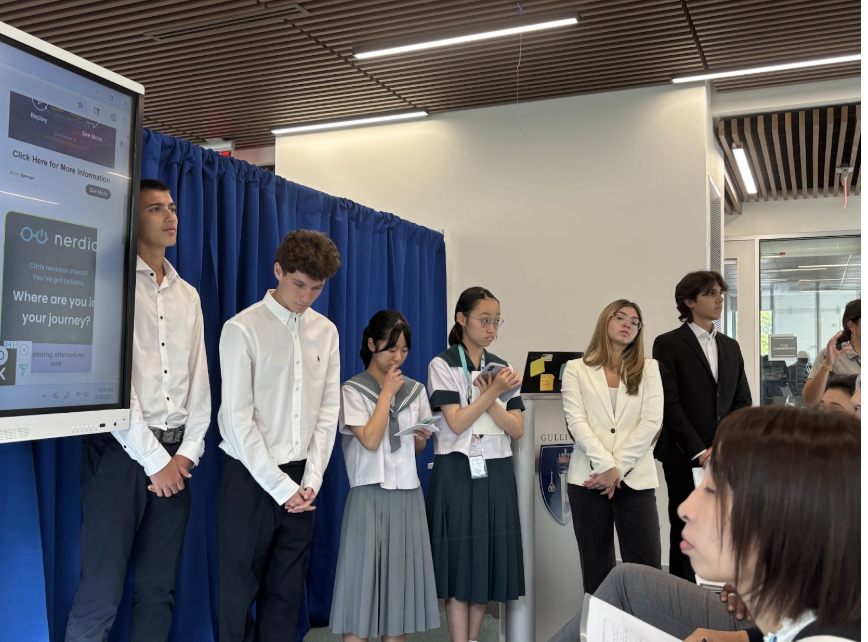
Before negotiations began, students heard from keynote speakers who shared their experiences serving in the military and working at the United Nations. Afterward, students began the voting phase, where they needed more than 66 percent approval from the assembly to pass a proposal determining which states would host the bases.
“The most challenging part of the treaty was negotiating in such a big group because everyone in the US part was putting in insight on it and go after their own interest, and for the Japanese side it was hard to convince them to vote for the laws that we felt most prominent to put bases in,” sophomore Sophia Valeri said.
Japanese interpreters facilitated communication between the groups, while Dr. Burnett’s government students provided additional insight during discussions about state selections. After deliberation and voting, the treaty was approved by both delegations, concluding the summit.